Debits and Credits Explained Simply: The Beginner’s Guide to Understanding Bookkeeping
If you’ve ever tried learning bookkeeping and immediately felt confused by debits and credits, you are definitely not alone.
In fact, debits and credits are one of the biggest reasons many people quit learning accounting before they ever truly understand it. Most explanations sound overly technical, academic, or filled with accounting jargon that makes beginners feel overwhelmed.
But here’s something I believe you need to know:
Debits and credits are actually much simpler than most people think.
Once you understand the logic behind them, bookkeeping becomes dramatically easier and accounting software like QuickBooks starts making far more sense.
In this guide, we are going to break down debits and credits in the simplest way possible using practical examples that real business owners and beginner bookkeepers can actually understand.
By the end of this article, you will understand:
What debits and credits are
Why they exist
How double-entry accounting works
The accounting equation
The DEAD CLIC rule
Real examples of bookkeeping transactions
Why this matters in QuickBooks and accounting software
Let’s jump in.

What Is Double-Entry Accounting?
Before you can fully understand debits and credits, you first need to understand the system they belong to.
That system is called double-entry accounting.
Double-entry accounting simply means that every financial transaction affects at least two accounts.
That’s it.
Every transaction has two sides.
For example, imagine your business earns $1,000 from a customer.
What happened?
Well, your cash increased by $1,000.
But that’s not the only thing that changed.
Your revenue also increased by $1,000.
One transaction affected two accounts:
Cash
Revenue
This is the foundation of modern bookkeeping.
Every transaction creates a balanced relationship between accounts.
That balance is what allows accountants and bookkeepers to accurately track where money came from and where it went.
Without double-entry accounting, financial statements would quickly become inaccurate and unreliable.
Why Does Double-Entry Accounting Exist?
Double-entry accounting exists because accounting is built around something called the accounting equation.
The accounting equation is:
Assets=Liabilities+Equity
This equation must always stay balanced.
Let’s define each part.
Assets
Assets are things the business owns.
Examples include:
Cash
Equipment
Computers
Inventory
Accounts receivable
If it provides value to the business, it is probably an asset.
Liabilities
Liabilities are debts the business owes to others.
Examples include:
Credit card balances
Bank loans
Payroll taxes owed
Accounts payable
Liabilities represent obligations the business must eventually pay.
Equity
Equity represents the owner’s value in the business.
You can think of equity as what remains after subtracting liabilities from assets.
Another way to write the accounting equation is:
Assets - Liabilities = Equity
Every financial transaction must keep this equation balanced.
Debits and credits are simply the mechanism accountants use to maintain that balance.

What Are Debits and Credits?
This is where many beginners become confused.
A debit does not automatically mean “increase.”
A credit does not automatically mean “decrease.”
That misunderstanding causes a huge amount of confusion for people learning bookkeeping.
In accounting, debits and credits can either increase or decrease an account depending on the type of account involved.
This system has nothing to do with:
Debit cards
Credit cards
Bank terminology
Accounting uses these terms differently.
The key is understanding account categories.
Some accounts normally increase with debits.
Other accounts normally increase with credits.
Once you understand which categories behave which way, bookkeeping becomes much easier.
The DEAD CLIC Rule
A very common accounting acronym used to remember normal account balances is:
DEAD CLIC
This acronym helps you remember which account types increase with debits and which increase with credits.
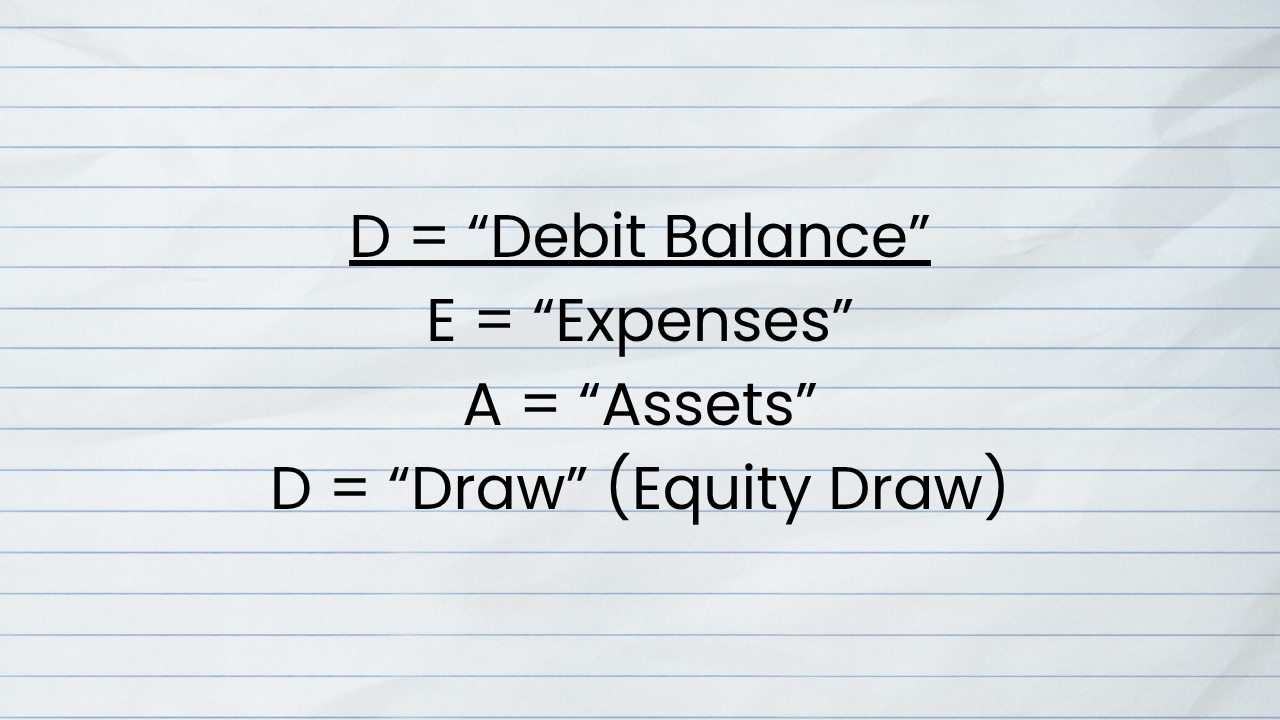
DEAD = Debit Increases
DEAD stands for:
DEBIT
Expenses
Assets
Draw (on equity)
These accounts normally increase with debits.
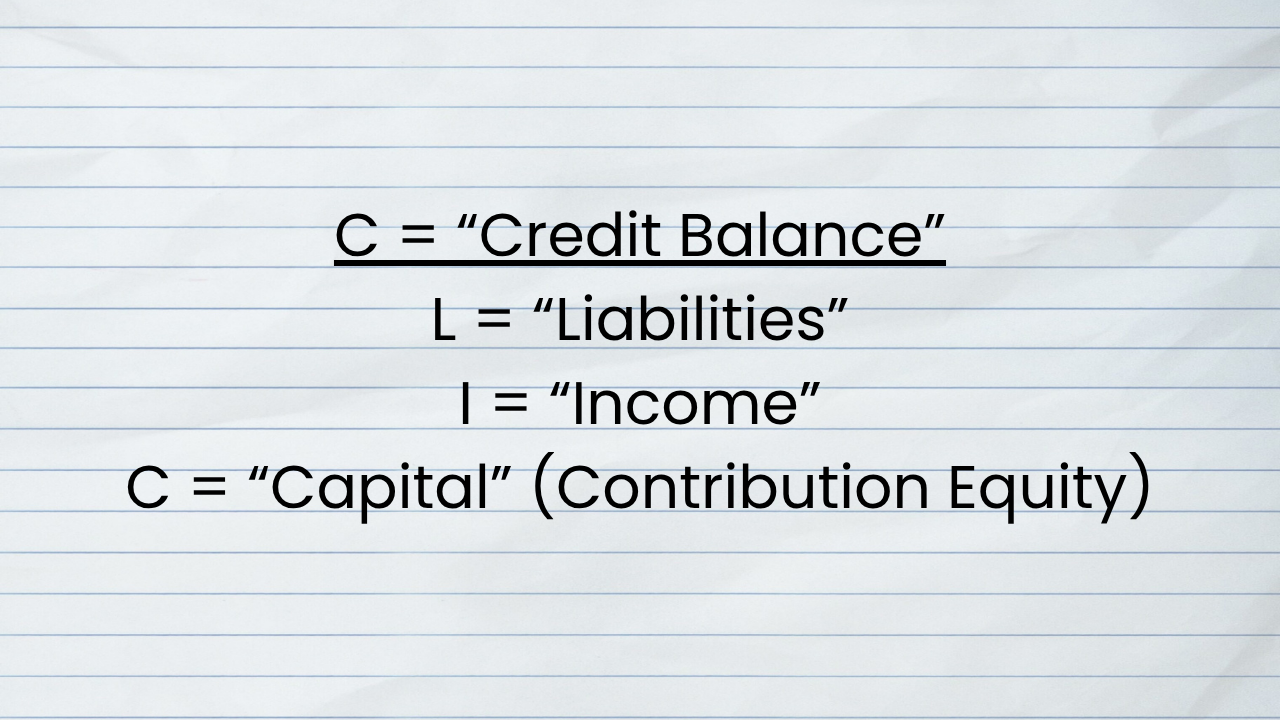
CLIC = Credit Increases
CLIC stands for:
CREDIT
Liabilities
Income
Capital/Contributions
These accounts normally increase with credits.
Understanding the Logic Behind It
Instead of trying to memorize random accounting rules, think about what is happening inside the business.
For example:
When your business earns money, revenue increases
When you buy equipment, assets increase
When you borrow money, liabilities increase
When you pay bills, expenses increase
Debits and credits simply track those changes in a structured and balanced way.
Example 1: Customer Payment
Let’s start with one of the most common bookkeeping transactions.
Imagine you are a freelance designer and a client pays you $1,000.
What changed?
Your cash increased by $1,000.
Cash is an asset account.
Assets increase with debits.
So we debit cash for $1,000.
But remember:
Every transaction affects at least two accounts.
The other side is revenue.
Revenue is an income account.
Income increases with credits.
So we credit revenue for $1,000.
The journal entry looks like this:
Debit Cash: $1000
Credit Revenue: $1000
The transaction stays balanced because total debits equal total credits.
Asset ($1000) = Liabilities + Equity (+$1000)
Example 2: Paying an Expense
Now imagine your business pays $200 for internet service.
What changed?
Your internet expense increased.
Expenses increase with debits.
So we debit internet expense.
But cash decreased because money left the business bank account.
Assets decrease with credits.
So we credit cash.
The journal entry becomes:
Debit Internet Expense: $200
Credit Cash: $200
Asset (-$200) = Liabilities + Equity (-$200)
Again, the transaction balances perfectly.
Example 3: Buying Equipment
Now let’s say your business purchases a laptop for $2,500 cash.
What happened?
Your equipment increased.
Equipment is an asset account.
Assets increase with debits.
So we debit equipment.
But cash decreased.
Cash is also an asset account.
Assets decrease with credits.
So we credit cash.
The entry becomes:
Debit Equipment: $2500
Credit Cash: $2500
Asset (+$2500; -$2500) = Liabilitties + Equity
This example is important because it shows that both accounts involved can be assets.
One asset increased while another decreased.
The accounting equation still remains balanced.
Example 4: Taking Out a Business Loan
Now let’s look at liabilities.
Imagine your business receives a $10,000 loan from the bank.
Cash increases.
Cash is an asset.
Assets increase with debits.
So we debit cash.
But the business also now owes money.
That creates a liability.
Liabilities increase with credits.
So we credit loan payable.
The journal entry becomes:
Debit Cash: $10,000
Credit Loan Payable: $10,000
Assets (+$10,000) = Liabilities (+$10,000) + Equity
This transaction increases both assets and liabilities equally.
Why Debits and Credits Matter in QuickBooks
A lot of business owners ask this question:
“If QuickBooks handles everything automatically, do I really need to understand debits and credits?”
The answer is absolutely yes.

Even though accounting software automates bookkeeping entries, the software is still using debits and credits behind the scenes.
Understanding debits and credits helps you:
Troubleshoot bookkeeping mistakes
Understand why reports look wrong
Fix duplicated income
Correct loan balances
Understand reconciliations
Read financial statements properly
Without understanding the accounting foundation underneath the software, bookkeeping can feel confusing and random.
Once you understand debits and credits, QuickBooks starts feeling much more logical.
How Debits and Credits Affect Financial Statements
Debits and credits directly impact your financial statements.
The Balance Sheet
The balance sheet tracks:
Assets
Liabilities
Equity
Because debits and credits keep transactions balanced, the balance sheet always stays mathematically correct.
The Profit and Loss Statement
The profit and loss statement tracks:
Income
Expenses
Revenue increases with credits.
Expenses increase with debits.
At the end of the period, these accounts determine whether the business earned a profit or loss.
The Simplest Way to Think About Debits and Credits
Here is the simplest mental model possible:
Debits and credits are just a balancing system.
That’s all they are.
Every transaction has two sides.
Something came from somewhere.
Something went somewhere.
Something increased.
Something decreased.
The bookkeeping system exists to track those relationships accurately.
Once you stop thinking of debits and credits as scary accounting terminology and start viewing them as a balancing mechanism, accounting becomes far less intimidating.
Common Beginner Mistakes
Mistake #1: Thinking Debit Always Means Increase
This is probably the biggest mistake beginners make.
Whether a debit increases or decreases an account depends entirely on the account category.
Mistake #2: Memorizing Without Understanding
Many people try to memorize journal entries without understanding the logic behind them.
That approach usually fails.
Focus on understanding:
What changed
Which accounts were affected
Whether those accounts increase with debits or credits
Mistake #3: Ignoring the Accounting Equation
The accounting equation is the foundation of bookkeeping.
If you understand the equation, debits and credits become much easier to understand.
Why Learning This Skill Is Valuable
Understanding debits and credits is useful for:
Small business owners
Freelancers
Bookkeepers
Accounting students
Entrepreneurs
QuickBooks users
Even if you never become an accountant, this knowledge helps you:
Understand your finances better
Read reports confidently
Catch bookkeeping errors
Communicate with accountants more effectively
Make smarter business decisions
Quick Recap
Let’s review the most important points.
Double-entry accounting means every transaction affects at least two accounts.
The accounting equation is:
Assets=Liabilities+Equity
Debits increase:
Expenses
Assets
Draws
Credits increase:
Liabilities
Income
Capital
Every transaction must stay balanced.
Debits must always equal credits.
Final Thoughts
Debits and credits may seem confusing at first, but once you understand the logic behind the system, bookkeeping becomes much more intuitive.
You do not need to be a math genius to understand accounting.
You simply need to understand relationships between accounts and how transactions stay balanced.
The more examples you work through, the easier this becomes.
And once this concept clicks, accounting software like QuickBooks becomes dramatically easier to understand and use.
If you are learning bookkeeping for your business, studying accounting, or trying to improve your financial knowledge, mastering debits and credits is one of the most important foundational skills you can develop.
Not sure you can do this yourself? I’d be more than happy to be your bookkeeper and handle your books for you!